
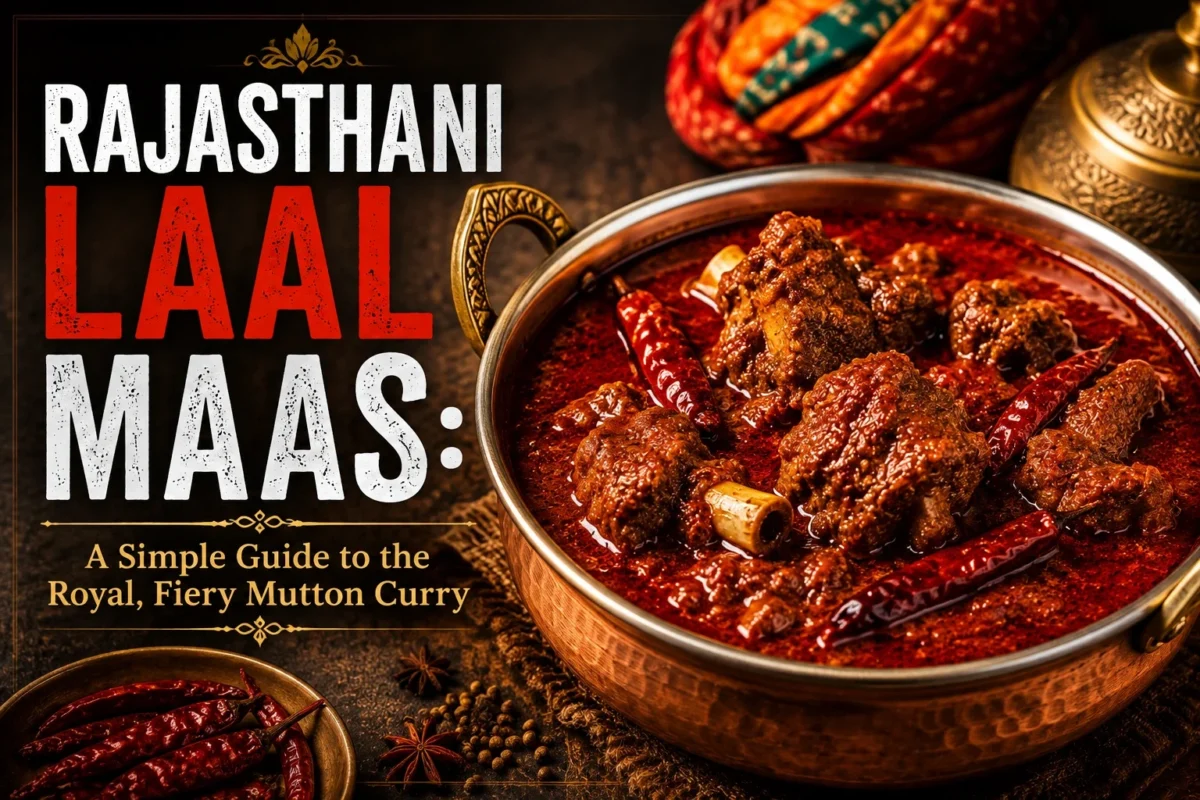
Laal Maas is one of the boldest, most fiery dishes to come out of India, and it comes straight from the royal kitchens of Rajasthan. The name says it all. “Laal” means red, and “Maas” means meat, so Laal Maas simply means red meat. That deep red color, along with a strong, smoky heat, comes from one special ingredient: the Mathania Chilli, grown in a small village near Jodhpur.
This guide will show you how to make an authentic Rajasthani Laal Maas at home, using simple steps. We will also look at where this royal dish comes from, why the Mathania Chilli matters so much, and how to control the heat so the dish suits your own taste, without losing what makes it special.
What Is Laal Maas, and Where Does It Come From?
Laal Maas is a mutton curry from Rajasthan, cooked in a rich, red gravy made mostly from dried red Chillies, yogurt, and ghee. The dish is closely linked to the desert region of Marwar, and to the royal Rajput families who once ruled it. Many food historians trace its roots back to a dish called Junglee Maas, a simple hunting camp meal cooked by royal cooks, known as khansamas, who traveled with Rajput kings on hunting trips centuries ago.
Back then, water was scarce in the Rajasthani desert, so meat, usually wild game, was cooked in a thick, dry style using mostly ghee, Chillies, and whatever spices were on hand. Over time, as this rough camp food moved from the wilderness into royal kitchens and grand palace feasts, it slowly turned into the dish we now know as Rajasthani Laal Maas, made with mutton instead of wild game, and built around the fiery Mathania Chilli that gives it its name and its color.
Today, Laal Maas is seen as one of the great symbols of Rajasthani royal cooking, served at weddings, festivals, and family celebrations across the state, and increasingly on menus far beyond Rajasthan as well.
The Real Star: The Mathania Chilli
If there is one thing that makes this dish stand apart from every other Indian mutton curry, it is the Mathania Chilli. This dried red Chilli is grown mainly in and around the village of Mathania, close to Jodhpur, where the hot, dry desert climate is said to give the Chilli its deep red color and its unique smoky, earthy taste.
Unlike many other dried red Chillies used mostly for their color, Mathania Chillies bring real heat as well, which is why an authentic Rajasthani Laal Maas has a reputation as one of India’s spiciest mutton curries. If Mathania Chillies are hard to find outside Rajasthan, Kashmiri dried red Chillies are the most common substitute, since they offer a similar bright red color, even though they are milder in heat. Some cooks also use a mix of both, to get closer to the true flavor of a Mathania Chilli mutton curry without making the dish overwhelmingly hot for every guest at the table.
Why Technique Matters as Much as the Chilli
Laal Maas may look like a dish that is all about heat, but a few cooking choices are just as important as the Chillies themselves.
Soaking the Chillies properly
Dried Mathania Chillies need to soak in warm water for about 30 minutes before they are ground into a smooth paste. This softens the tough, dried skin and makes it much easier to blend the Chillies into a fine, vibrant red paste, rather than a rough, gritty one.
Frying the onions until truly golden
As with many rich Indian curries, the onions need to be fried until they turn a proper golden brown, not just soft. This step builds a deep, sweet base that helps balance the sharp heat of the Chillies later in the cooking process.
Searing the mutton before it meets the spices
Browning the mutton pieces on high heat for several minutes locks in their juices and adds a layer of flavor that plain simmering cannot achieve on its own. This step is what gives the final curry its deep, rounded taste, rather than a flat, boiled one.
Cooking the Chilli paste (bhunno) until the ghee separates
Frying the Mathania Chilli paste in ghee for eight to ten minutes, until the ghee visibly separates from the mixture, removes the raw taste of the Chillies and lets their real smoky flavor come through. This step, often called bhunno in Hindi, is one of the most important parts of the whole cooking process.
Adding curd slowly, off high heat
Curd can split or curdle very easily if it meets a very hot pan too quickly. Lowering the heat and adding the curd little by little, while stirring all the time, keeps the gravy smooth and creamy instead of grainy or watery.
A long, slow simmer
The final simmer, which can take 50 minutes to an hour, is what turns the mutton soft and tender, letting it soak up the deep red gravy fully. Rushing this step is one of the most common reasons a homemade laal maas recipe turns out tougher or less flavorful than the version served in Rajasthan.
Ingredients for Rajasthani Laal Maas (Serves 4-5)
A. Main Ingredients
- Mutton: 1 kg, shoulder or other tender cuts, on the bone
- Ghee (clarified butter): 1/2 cup, traditional and important for real flavor
- Onions: 3 large, finely sliced
- Ginger-garlic paste: 1.5 tablespoons
- Whisked curd (yogurt): 1/2 cup
- Salt: to taste
B. The Signature Mathania Chilli Paste
- Dried Mathania red Chillies: 12-15 (or dried Kashmiri red Chillies as a substitute)
- Warm water: for soaking
C. Whole and Ground Spices
- Cumin seeds (jeera): 1 teaspoon
- Green cardamoms: 4-5
- Black cardamoms: 2
- Cinnamon stick: 1 inch
- Cloves: 4-5
- Bay leaves: 2
- Coriander powder: 1 tablespoon
- Garam masala powder: 1/2 teaspoon
D. Optional Smoky Infusion (Dungar)
- A small piece of charcoal
- Ghee: 1/2 teaspoon
Step-by-Step Method
Step 1: Prepare the Mathania Chilli Paste
- If you prefer a milder heat, deseed half of the dried Mathania Chillies. For the traditional, fully fiery version, keep all the seeds.
- Soak the Chillies in warm water for 30 minutes, until they turn soft.
- Drain the Chillies and blend them into a smooth, bright red paste with 2-3 tablespoons of water.
Step 2: Sear the Mutton and Onions
- Heat the ghee in a heavy-bottomed handi or deep pot over medium heat.
- Add the cumin seeds, cardamoms, cinnamon, cloves, and bay leaves. Saute for 30 seconds until fragrant.
- Add the finely sliced onions and fry until golden brown, being careful not to burn them.
- Add the ginger-garlic paste and saute for 2 minutes, until the raw smell disappears.
- Add the washed mutton pieces along with salt. Sear on high heat for 10 minutes, stirring continuously, until the meat turns brown and seals in its juices.
Step 3: Slow Cook With the Spices
- Add the prepared Mathania Chilli paste and coriander powder to the seared mutton.
- Stir-fry, or bhunno, on medium heat for 8-10 minutes, until the ghee starts to separate from the Chilli mixture.
- Lower the heat and add the whisked curd little by little, stirring constantly so it does not curdle. Cook for 5 minutes, until it blends in completely.
- Add 1.5 to 2 cups of warm water. Mix well and bring the curry to a boil.
- Cover tightly with a lid and simmer on low heat for 50 to 60 minutes, until the mutton turns tender and succulent. You can also pressure cook it for 4-5 whistles on medium flame instead.
Step 4: Finish, With an Optional Smoky Touch
- Open the lid, sprinkle in the garam masala, and stir gently.
- Simmer uncovered for 5 minutes, until a deep red layer of ghee floats clearly on top.
- For the optional dungar smoke: place a small metal bowl on top of the cooked gravy, right inside the pot.
- Heat a small piece of charcoal on an open flame until it glows red.
- Place the charcoal inside the bowl, pour half a teaspoon of ghee over it, and cover the pot immediately with a lid for 2-3 minutes.
- Remove the charcoal bowl carefully and give the curry a final stir before serving.
Tips for the Best Rajasthani Laal Maas
- Choose bone-in mutton wherever possible – the bones add extra flavor to the gravy during the long, slow simmer.
- Do not rush the bhunno step; letting the ghee properly separate from the Chilli paste is what removes the raw, harsh taste from the Chillies.
- If you are new to very spicy food, start by deseeding all the Chillies and using slightly fewer of them, then adjust upward the next time you make it.
- Keep the heat low whenever curd is in the pot, so the gravy stays smooth and creamy rather than watery or split.
- Let the curry rest for a few minutes before serving, so the layer of red ghee on top becomes clearly visible, just like in a traditional Rajasthani kitchen.
Common Mistakes to Avoid
Laal Maas is a fairly simple dish at heart, but a handful of small mistakes are easy to make, especially on a first attempt.
- Using ordinary red Chilli powder instead of a proper Mathania or Kashmiri Chilli paste, which changes both the color and the depth of flavor.
- Rushing the searing step on the mutton, which leads to a less flavorful, flatter gravy overall.
- Adding curd too quickly on high heat, which can make the gravy grainy instead of smooth.
- Skipping the long, slow simmer, which does not give the mutton enough time to turn tender and soak up the rich, red gravy.
- Using too much water at once, which can thin out the curry and stop the layer of ghee from rising clearly on top at the end.
Ghee-Based vs. Mustard Oil-Based Laal Maas
There are two well-known regional styles of Rajasthani Laal Maas, and it helps to know both if you plan to explore this dish further. The Jodhpur style, which this recipe follows, uses ghee as the main cooking fat, giving the curry a rich, slightly sweet undertone that pairs well with the sharp heat of the Mathania Chillies. The Udaipur style, on the other hand, is traditionally made with mustard oil instead of ghee, which brings a sharper, more pungent flavor to the dish. Some versions also add a small amount of chopped tomatoes, though this addition is debated among traditional cooks, since many purists feel a true laal maas recipe should rely only on Chillies, yogurt, and ghee or mustard oil for its flavor and color.
Storage and Reheating Notes
Rajasthani Laal Maas keeps very well, and many people say it tastes even better the next day, once the Chillies and spices have had more time to settle into the mutton. Store it in an airtight container in the fridge for up to 3 days, or freeze it for up to a month. When reheating, warm it slowly on low heat, adding a small splash of water if the gravy has thickened too much, and stir gently so the meat pieces do not break apart.
A Simple Note on Spice Level and Nutrition
Laal Maas has a strong reputation as one of India’s spiciest mutton curries, mainly because of the natural heat in Mathania Chillies, which is quite different from milder Chillies used only for color. If you are cooking for guests who may not enjoy very spicy food, deseeding the Chillies and reducing their quantity slightly are both simple, effective ways to bring the heat down without losing the dish’s deep red color or its smoky character. In terms of nutrition, mutton is a good source of protein and iron, while the ghee adds richness that also helps balance the sharp heat of the Chillies on the palate.
When Laal Maas Is Usually Served
Laal Maas is often reserved for special occasions in Rajasthan, including weddings, festivals, and large family gatherings, partly because of the effort involved in preparing it properly, and partly because of its reputation as a royal, celebratory dish. It is commonly featured at Rajasthani thalis and banquet-style meals, served alongside a variety of breads and rice, where its bold red color and strong aroma make it stand out among the other dishes on the table. Because of its intense heat, it is also often paired with cooling sides like raw onion, lemon, or a simple raita, which help balance the fire of the Mathania Chillies for guests who may not be used to such a spicy mutton curry.
What to Serve With Laal Maas
- Bajra roti, a traditional pearl millet flatbread
- Missi roti, a spiced, mixed-flour flatbread
- Steamed basmati rice, for a simpler pairing
- Raw onions and lemon wedges, to freshen up each bite
Choosing the Right Mutton and Chillies
The final taste of a Rajasthani Laal Maas depends heavily on two choices made before you even start cooking: the cut of mutton and the type of Chilli.
Mutton cuts
Shoulder pieces, or other tender, bone-in cuts, work best for this recipe. The bones add flavor to the gravy during the long simmer, and the mix of meat and connective tissue in shoulder cuts turns soft and tender rather than dry after slow cooking. Very lean cuts, with little fat or bone, tend to turn tougher and less juicy in a dish that depends so much on a long, gentle simmer.
Fresh vs. dried Mathania Chillies
Only dried Mathania Chillies are used in a proper laal maas recipe, never fresh ones, since the drying process is part of what gives them their deep red color and smoky depth. If you are buying them for the first time, look for Chillies that are a deep, even red color, without too many pale or brown patches, since these usually grind into a better, brighter paste.
Choosing a substitute Chilli wisely
When Mathania Chillies are not available, dried Kashmiri red Chillies are the closest substitute in terms of color, though they will not match the same level of heat. A small pinch of regular red Chilli powder can be added alongside Kashmiri Chillies if you want to bring the heat level closer to a traditional Mathania Chilli mutton curry, without losing the bright red color that makes this dish so recognizable.
A Closer Look at the History of Laal Maas
The story of Laal Maas is often traced back more than seven or eight centuries, to a rougher dish called Junglee Maas, cooked by royal chefs, or khansamas, who traveled with Rajput kings on hunting trips through the forests of Rajasthan. At that time, meat came mainly from hunting, water was scarce in the desert region, and cooks had to work with a small handful of ingredients, mostly red Chillies, ghee, garlic, and onion.
As the dish moved from rough hunting camps into royal palace kitchens, and later into everyday Rajasthani households, mutton gradually replaced wild game as the more practical, available choice of meat. Some stories also point to a cooking contest between royal households, where the version of the dish created by the House of Mewar became especially well known, further cementing Laal Maas as a proud symbol of Rajasthani royal cooking. Even today, the dish is closely associated with celebration and hospitality, often served at weddings and festive occasions across the state.
Simple Variations to Try
Once you feel confident with the basic method, a few small changes can give you a slightly different take on this classic royal Rajasthani mutton curry.
- Udaipur style: replace the ghee with mustard oil for a sharper, more pungent flavor, closer to the version traditionally cooked in Udaipur.
- Milder version: use a mix of Kashmiri Chillies and just two or three deseeded Mathania Chillies, to keep the color bold while lowering the heat significantly.
- Tomato-based version: add one or two finely chopped tomatoes along with the Chilli paste for a slightly tangier, saucier gravy, though this moves a little further from the most traditional style.
- Extra smoky finish: repeat the dungar smoking step a second time for an even deeper, more pronounced smoky flavor in the final curry.
Ingredient Substitutions
A few ingredients in this recipe can be hard to find outside Rajasthan, so here are some simple swaps that still keep the dish close to an authentic laal maas recipe.
- Mathania Chillies: use dried Kashmiri red Chillies instead, and add a small amount of regular red Chilli powder if you want to bring the heat level closer to the original.
- Ghee: unsalted butter can be used in a pinch, though it will not have quite the same rich, nutty flavor that ghee brings to the dish.
- Curd: plain, unsweetened yogurt works well as a direct substitute, as long as it is whisked smooth before adding it to the pot.
- Charcoal for smoking: this step is entirely optional and can be skipped completely without changing the core flavor of the curry.
Frequently Asked Questions
What does laal maas mean?
“Laal” means red and “Maas” means meat in Hindi, so the name simply describes the dish’s deep red color, which comes mainly from the Mathania Chillies used in the gravy.
What are Mathania Chillies, and can I use something else?
Mathania Chillies are dried red Chillies grown near the village of Mathania, close to Jodhpur, known for their bright red color and real heat. If they are hard to find, dried Kashmiri red Chillies are the most common substitute, though they are milder and give a slightly less intense flavor.
Why is laal maas so spicy?
Unlike many Chillies used mainly for color, Mathania Chillies carry genuine heat, which is why an authentic Rajasthani Laal Maas is known as one of India’s spiciest mutton curries. The heat can be reduced by deseeding the Chillies or using fewer of them.
Is laal maas made with mustard oil or ghee?
Both are used, depending on the region. The Jodhpur style typically uses ghee, giving a richer, slightly sweeter flavor, while the Udaipur style is more commonly made with mustard oil, which gives a sharper, more pungent taste.
What is served with laal maas?
It is traditionally served with bajra roti or missi roti, though steamed rice, raw onions, and lemon wedges are also common accompaniments.
Final Thoughts
Rajasthani Laal Maas is a dish built on bold flavor and real patience, from soaking and grinding the Mathania Chillies, to slowly simmering the mutton until it turns soft and deeply red. It carries centuries of history with it, from its rough beginnings as a hunting camp meal to its place today as one of the proudest dishes on any royal Rajasthani table. Once you taste that first spoonful of a properly cooked laal maas, with its fiery red gravy and tender, ghee-soaked mutton, you will understand why this dish has remained a symbol of Rajasthan’s bold, fearless approach to food for so many generations.