
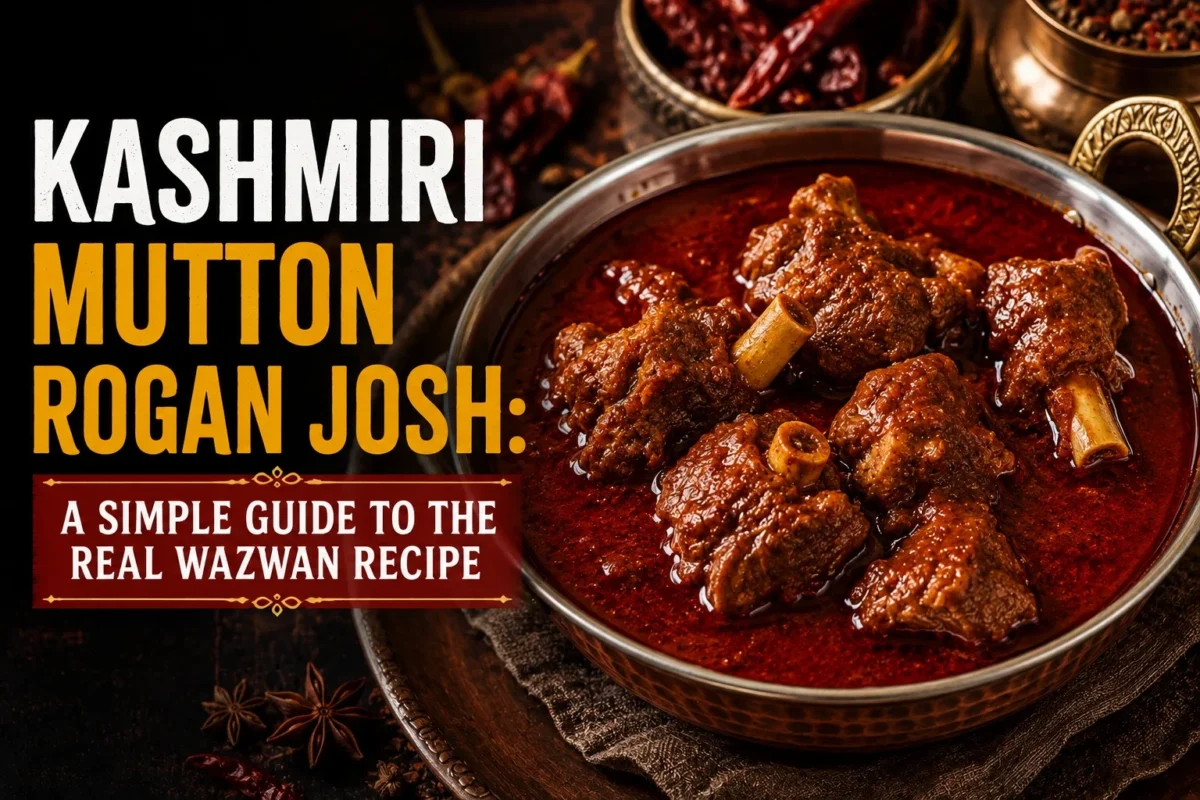
Rogan Josh is one of the most famous dishes to come out of Kashmir. It is a slow-cooked mutton curry with a deep red color and a rich, smooth gravy. The name sounds fancy, but the dish itself is not hard to make at home. You just need the right spices, a little patience, and a few small tricks that Kashmiri cooks have used for years.
This guide will walk you through a full recipe for Kashmiri Mutton Rogan Josh, step by step, in simple language. We will also talk about where the dish comes from, why it looks so red, and what small mistakes to avoid so your curry comes out just as good as the one served at a Wazwan feast.
What Is Rogan Josh?
Rogan Josh is a mutton curry from Kashmir. The name comes from two Persian words. “Rogan” means oil or fat, and “Josh” means heat or passion. Together, the name points to meat cooked slowly in oil, on strong heat, until it turns tender and the oil rises to the top of the gravy.
This dish has roots in Persia, and it came to Kashmir along with Mughal cooking styles many years ago. Over time, it became a core part of Wazwan, the grand multi-course Kashmiri feast served at weddings and big celebrations. A Wazwan meal can have dozens of meat dishes, but Rogan Josh is almost always one of the stars.
There are two well-known styles of Kashmiri Mutton Rogan Josh. One is the Kashmiri Muslim style, which often uses onion and garlic. The other is the Kashmiri Pandit style, which skips onion and garlic completely and instead leans on yogurt, fennel powder, and asafoetida for its flavor. The recipe in this article is a classic, simple version that works well for most home kitchens, and it can easily be adjusted either way.
Why Is Rogan Josh So Red?
The deep red color is one of the most famous things about this dish, and it does not come from heavy spice alone. Two ingredients are responsible for that classic red mutton curry color.
Kashmiri red chili powder
Kashmiri red chili powder is known for its bright red color, not for being extremely hot. This is different from many other Indian chili powders, which are made mainly for heat. Kashmiri chili gives Rogan Josh its signature color without making the dish too spicy to enjoy.
Ratanjot (alkanet root)
Ratanjot is a dried root that is soaked or lightly fried in warm oil or ghee until it releases a deep red color. This red oil is then added to the curry near the end of cooking. Ratanjot is optional, but it is one of the most traditional tricks used to get that rich, glossy red look that a real Kashmiri Mutton Rogan Josh is known for. If you cannot find ratanjot, a small amount of saffron soaked in warm water is a common substitute, though the shade of red will be a little different.
Why the Cooking Steps Matter More Than You Think
This is not a complicated recipe, but a few small choices really change the final result. Here is why each part of the method matters.
Heating the mustard oil until it smokes
Mustard oil has a strong, sharp smell when it is raw. Heating it until it smokes lightly, then letting it cool for a moment, softens that sharp smell. This step is common in many North Indian and Kashmiri recipes, and it helps the final curry taste smooth instead of harsh.
Searing the mutton first
Frying the mutton pieces on medium-high heat until they turn golden brown builds a layer of flavor on the outside of the meat. This step, called searing, is what gives the curry its deep, roasted taste. Skipping this step, or rushing it, often leads to a flatter, less flavorful gravy.
Making a paste with the chili powder
Kashmiri red chili powder burns very easily if it touches hot oil directly. Mixing it with a little water first, to form a smooth paste, protects the chili powder from burning and helps the oil turn that bright red color instead of a dull brown.
Adding the curd slowly
Curd (yogurt) can split or curdle if it is added too fast to a hot pan. Adding it slowly, while stirring all the time, and keeping the heat low, keeps the gravy smooth and creamy instead of grainy.
Cooking low and slow
The final simmer, which can take 45 minutes to an hour, is where the word “Josh” really comes into play. This slow, gentle heat is what turns tough mutton into soft, melt-in-the-mouth pieces, and it is also what allows the rich layer of oil, or “rogan,” to rise clearly to the top of the gravy by the end.
Ingredients for Kashmiri Mutton Rogan Josh (Serves 4-5)
A. Main Ingredients
- Mutton: 1 kg, shoulder or shank, cut into medium curry pieces
- Mustard oil: 5 tablespoons (traditional), or ghee
- Thick curd (yogurt): 1 cup, well beaten
B. Aromatic Whole Spices
- Shahi jeera (caraway seeds): 1 teaspoon
- Green cardamoms: 4-5
- Black cardamoms: 2
- Cinnamon stick: 1 inch
- Cloves: 4-5
- Bay leaves: 2
- Asafoetida (hing): a pinch
C. Ground Spice Mix
- Kashmiri red chili powder: 2 tablespoons
- Fennel powder (saunf powder): 1 tablespoon
- Dry ginger powder (saunth powder): 1 teaspoon
- Garam masala powder: 1/2 teaspoon
- Nutmeg and mace powder (jaiphal and javitri): 1/4 teaspoon
- Salt: to taste
D. Optional, for Natural Color and Flavor
- Ratanjot (alkanet root): 1 tablespoon, infused in 2 tablespoons of warm mustard oil or ghee
- Or: Kashmiri saffron strands, 1/2 teaspoon, soaked in 2 tablespoons of warm water
Step-by-Step Method
Step 1: Sear the Mutton
- Heat the mustard oil in a heavy-bottomed pot or pressure cooker until it smokes lightly. Turn off the heat for a minute so it cools slightly, then turn the heat back to medium.
- Add the asafoetida and all the whole spices – cardamoms, cinnamon, cloves, bay leaves, and shahi jeera. Saute for 30 seconds until fragrant.
- Add the washed mutton pieces. Fry on medium-high heat for 8-10 minutes, until the meat turns golden brown and seared on all sides.
Step 2: Add the Spices and Curd
- Lower the flame. Add salt and dry ginger powder, and mix well.
- In a small bowl, mix the Kashmiri red chili powder with 2 tablespoons of water to form a smooth paste. This stops it from burning. Pour this paste into the pot.
- Stir well on medium heat for 2-3 minutes, until the oil turns a bright red color.
- Reduce the heat to low. Slowly add the beaten curd while stirring all the time, so it does not curdle.
- Cook for 5 minutes, until the curd blends in fully and the oil starts to separate from the gravy.
Step 3: Slow Cook (The “Josh”)
- Add the fennel powder and 1.5 to 2 cups of warm water. Mix well.
- Strain the red liquid from the soaked ratanjot, or the saffron water, into the gravy for that classic Kashmiri red color.
- Cover with a tight lid and simmer on low heat for 45 to 60 minutes, until the mutton is soft and tender. If using a pressure cooker, cook for 4-5 whistles, then let the pressure release naturally on its own.
Step 4: Finish the Curry
- Open the lid and sprinkle in the nutmeg-mace powder and the garam masala.
- Simmer uncovered for 5 minutes on low heat, until the gravy thickens and a rich layer of oil (the “rogan”) floats clearly on top.
Tips for the Best Kashmiri Mutton Rogan Josh
- Choose mutton with some bone in it. Bones add extra flavor to the gravy as it slow-cooks.
- Do not skip the step of heating and cooling the mustard oil – it makes a real difference to the final taste.
- Always mix the chili powder with water before adding it to hot oil, so it does not turn bitter or burnt.
- Keep the flame low whenever curd is in the pot, so the gravy stays smooth and does not split.
- Let the curry rest for a few minutes after cooking. This helps the flavors settle and makes the red oil layer easier to see.
Common Mistakes to Avoid
Rogan Josh is a simple dish at its core, but a few small mistakes are easy to make if you are trying it for the first time.
- Adding curd too quickly, which can make the gravy look grainy or split instead of smooth.
- Using regular red chili powder instead of Kashmiri red chili powder, which can make the dish too spicy and change its color.
- Skipping the searing step, which leads to a curry that tastes flatter and less rich.
- Rushing the slow-cooking stage, which does not give the mutton enough time to turn soft and tender.
- Adding too much water at once, which can thin out the gravy and stop the oil from rising clearly to the top.
Kashmiri Muslim Style vs. Kashmiri Pandit Style
As mentioned earlier, there are two well-known ways to make this dish, and it helps to understand the difference if you plan to explore more Kashmiri mutton curry recipes.
Kashmiri Muslim style
This version often includes onion, and sometimes garlic, in the base of the curry. It tends to have a slightly heavier, more layered flavor because of the fried onions.
Kashmiri Pandit style
This version leaves out onion and garlic completely. Instead, it depends more on curd, fennel powder, dry ginger powder, and asafoetida to build flavor. Many people say this version tastes lighter and more aromatic, with the spices standing out more clearly.
The recipe in this article sits close to the Pandit style, since it does not use onion or garlic, but it can easily be adjusted by adding sauteed onions at the start if you prefer the other style.
Storage and Reheating Notes
Kashmiri Mutton Rogan Josh stores very well, and many people feel it tastes even better the next day, once the spices have had more time to soak into the meat. Store it in an airtight container in the fridge for up to 3 days. It also freezes well for up to a month. When reheating, warm it slowly on low heat on the stove, and add a small splash of water if the gravy has thickened too much. Try not to reheat it on high heat, since that can make the mutton tougher and cause the gravy to separate.
A Simple Note on Spice Level and Nutrition
Even though the color looks fiery, Kashmiri Mutton Rogan Josh is not usually very hot. Most of the heat comes from a small amount of dry ginger and garam masala, not from a large amount of raw chili. Kashmiri red chili powder is chosen mainly for its color, not for extreme spice, so this dish is a good choice even for people who do not enjoy very spicy food. In terms of nutrition, mutton is a good source of protein and iron, while the curd and mustard oil add richness without needing any cream. As with any rich curry, it is best enjoyed in a normal portion size, alongside rice or bread, rather than eaten on its own in large amounts.
What to Serve With Rogan Josh
- Steamed basmati rice, the most common pairing
- Kashmiri sheermal, a soft, slightly sweet flatbread
- Plain naan or tandoori roti
- A simple side of haak (Kashmiri collard greens) for a full Wazwan-style meal
Choosing the Right Mutton for Rogan Josh
Not every piece of mutton works the same way in this dish, so it helps to choose carefully before you start cooking.
Shoulder and shank cuts
Shoulder and shank pieces are ideal for Kashmiri Mutton Rogan Josh because they have a good mix of meat, fat, and connective tissue. During the long, slow simmer, this connective tissue breaks down and turns soft, which is what gives the meat its melt-in-the-mouth texture. Leaner cuts, like leg meat alone, can turn dry and stringy after such a long cook.
Bone-in vs. boneless
Bone-in mutton is strongly preferred for this recipe. The bones release flavor into the gravy while it simmers, which adds depth that boneless meat alone cannot match. If you can only find boneless mutton, the dish will still work, but the gravy may taste slightly less rich.
Fresh vs. frozen
Fresh mutton is always the first choice, since it sears better and holds its texture more evenly. If you are using frozen mutton, make sure it is fully thawed and patted dry before it goes into the hot oil, since any extra water on the surface can stop the meat from browning properly during the searing step.
A Closer Look at the History of Rogan Josh
The story of Kashmiri Mutton Rogan Josh goes back many centuries, long before it became a signature dish of the Wazwan feast. Food historians generally agree that the dish has Persian roots, and that it likely traveled to Kashmir along with Mughal rulers and their cooks, who brought many rich, slow-cooked meat dishes with them into the region.
Over time, local Kashmiri cooks adapted the dish to match what was available in the valley, and to suit local tastes. This is likely how the two separate styles – the Muslim style with onion, and the Pandit style without onion or garlic – developed side by side over the years. Both styles kept the core idea of the original dish: meat cooked slowly, in fat, until it turns deeply tender, with a rich red color that makes it stand out even before the first bite.
Today, Kashmiri Mutton Rogan Josh is cooked well beyond Kashmir itself. It appears on restaurant menus across India and around the world, often listed simply as “rogan josh,” though the version served outside Kashmir does not always follow the same traditional method described in this guide. Learning to make an authentic rogan josh at home is one of the best ways to taste the dish the way it was originally meant to be enjoyed.
Simple Variations to Try
Once you feel comfortable with the basic recipe, there are a few small variations worth trying, each of which stays close to the spirit of a traditional Kashmiri mutton curry.
- Onion-based version: saute a cup of thinly sliced onions in the oil before adding the whole spices, for a slightly sweeter, more Muslim-style rogan josh.
- Extra fennel: some Kashmiri Pandit households add a little more fennel powder than usual, since fennel is considered one of the most important flavors in their style of cooking.
- Lamb instead of mutton: young lamb can be used in place of mutton, and it usually needs a slightly shorter cooking time since the meat is naturally more tender.
- Dum-style finish: some cooks seal the pot with a simple dough during the final simmer, similar to a biryani, to trap in even more aroma before opening it at the table.
Ingredient Substitutions
Some of the ingredients in this recipe may be hard to find outside India, so here are a few simple swaps that still keep the dish close to an authentic rogan josh.
- Mustard oil: if unavailable, use ghee or a neutral cooking oil, though the flavor will be slightly different since mustard oil has its own sharp, distinct taste.
- Kashmiri red chili powder: if you cannot find it, use a mix of regular red chili powder and a small amount of paprika, which brings back some of the color without adding too much extra heat.
- Ratanjot: this can simply be left out. The dish will still taste correct, just with a lighter shade of red instead of the deep, glossy color ratanjot gives.
- Fennel powder: whole fennel seeds, lightly crushed, can be used instead, though the powder blends into the gravy more smoothly.
- Shahi jeera: if you cannot find caraway seeds, regular cumin seeds can be used as a substitute, though the flavor will be a little more common and less distinct.
Frequently Asked Questions
What does rogan josh mean?
The name comes from two Persian words. “Rogan” means oil, and “Josh” means heat or passion. Together, the name describes meat cooked slowly in oil over strong heat until it becomes tender.
Why is rogan josh red in color?
The red color mainly comes from Kashmiri red chili powder, which is known for its bright color rather than strong heat. Many recipes also add ratanjot, a root that turns oil a deep red when it is soaked or lightly fried, for an even richer shade.
What is ratanjot and do I need it?
Ratanjot is a dried root, also called alkanet root, that is used to give food a natural red color. It is traditional in many Kashmiri Mutton Rogan Josh recipes, but it is optional. If you cannot find it, the dish will still taste good without it, just with a slightly lighter red color.
Is rogan josh very spicy?
Not usually. Kashmiri red chili powder is chosen for its deep color, not for heat, so the dish is normally mild to medium in spice level rather than very hot.
What is served with rogan josh?
It is most often served with steamed basmati rice or Kashmiri sheermal, though naan and other Indian breads also go well with it.
Can rogan josh be made a day in advance for a party?
Yes, and many cooks prefer it that way. Making Kashmiri Mutton Rogan Josh a day ahead gives the spices more time to settle into the meat, and the flavor is often noticeably better on the second day. Simply reheat it gently on low heat before serving, and add a small splash of water if the gravy has thickened too much overnight.
Final Thoughts
Kashmiri Mutton Rogan Josh is proof that a few simple ingredients, handled the right way, can turn into something truly special. There is no long list of hard-to-find items here, just mustard oil, curd, a handful of whole spices, and a good cut of mutton, cooked low and slow until the flavors come together. Once you see that layer of red oil rise to the top of the pot, you will understand why this dish has stayed at the heart of Kashmiri cooking, and at the center of the Wazwan feast, for so many years. Whether you choose the onion-based Muslim style or the simpler Pandit style without onion and garlic, the heart of the recipe stays the same: patience, good spices, and a slow, gentle simmer that turns humble mutton into something worth celebrating.