
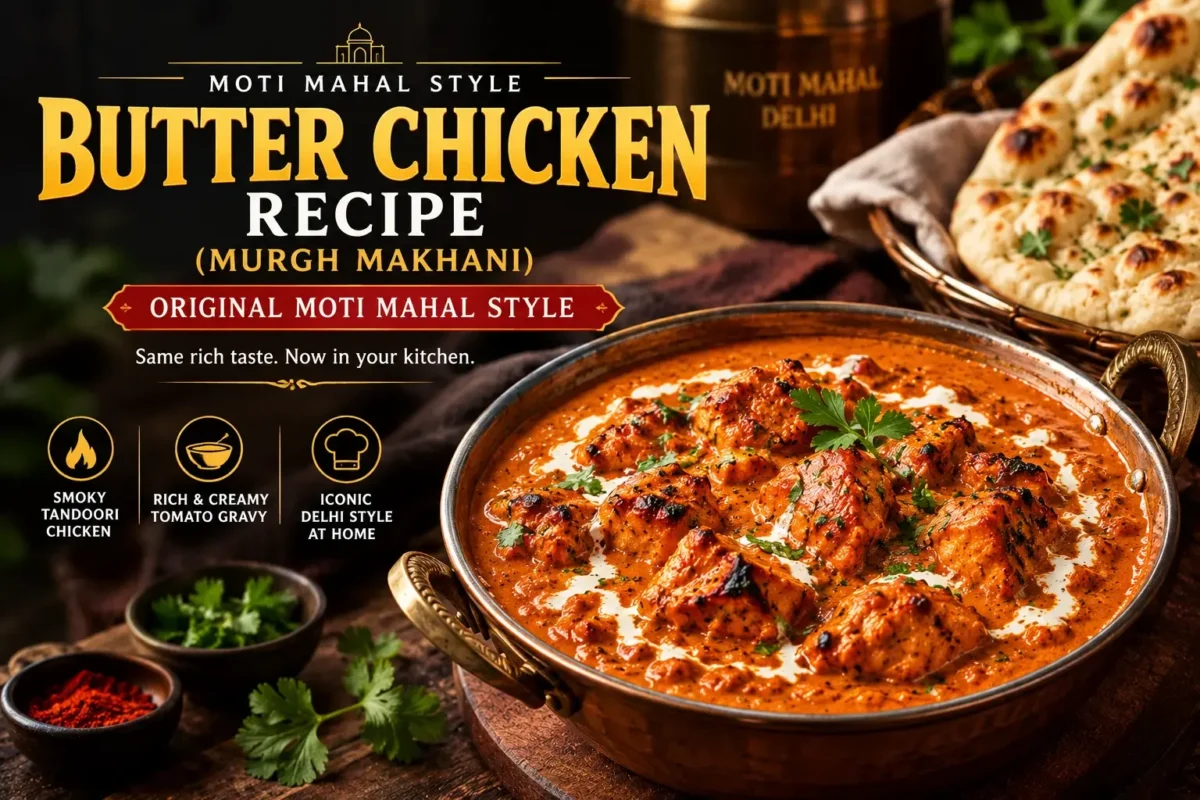
Butter Chicken, known in Hindi as Murgh Makhani, is probably the most famous Indian dish in the world. It is smoky, charred chicken sitting in a rich, buttery tomato sauce, finished with a touch of cream. You will find it on Indian restaurant menus almost everywhere, from small local spots to big five-star hotels, and for good reason. It manages to be both comforting and a little fancy at the same time.
This guide will show you how to make a true butter chicken recipe at home, close to the original version served at Moti Mahal, the Delhi restaurant most closely connected to this dish. We will look at where butter chicken really comes from, why the chicken is marinated twice, and why a few small steps make such a big difference between an average curry and a proper restaurant style butter chicken.
Where Does Butter Chicken Really Come From?
The story of butter chicken is closely tied to a restaurant called Moti Mahal, first opened in Peshawar in 1920 by Kundan Lal Gujral, and later reopened in Delhi after Partition. Moti Mahal became famous for introducing tandoori cooking to Delhi, and it is widely credited with creating several major North Indian dishes, including tandoori chicken, dal makhani, and of course butter chicken itself.
The most common version of the story says that butter chicken was created almost by accident. Leftover tandoori chicken, which can dry out if left too long, was simmered in a rich, buttery tomato sauce to bring back its moisture and flavor, rather than let it go to waste. Out of that simple kitchen fix came one of the most loved dishes in the world.
Interestingly, who exactly deserves credit for inventing butter chicken is still debated today. Two families connected to the original Moti Mahal, the Gujrals and the Jaggis, have each claimed that their own relative was the true inventor of the dish, and this disagreement has even ended up in the Delhi High Court in recent years. Whichever family’s story you believe, both agree on the basic idea: butter chicken grew out of Moti Mahal’s tandoori cooking, sometime in the years following the restaurant’s move to Delhi.
Why the Two-Stage Marination Really Matters
A proper murgh makhani recipe does not simply toss chicken into a sauce. It relies on grilling or charring the chicken first, and that charring depends on a careful, two-stage marination process.
The first marinade: a quick flavor base
A short, simple marinade of lemon juice, red chili powder, and salt is rubbed into the chicken first. This step works quickly, helping to season the meat right at the surface and slightly tenderize it before the richer marinade goes on.
The second marinade: the real flavor builder
The second marinade, made with thick hung curd, ginger paste, garlic paste, garam masala, and kasuri methi, is what really builds the deep, roasted flavor of butter chicken. Curd-based marinades are common in tandoori cooking because they help tenderize the meat gently, without making it mushy, while carrying the spices deep into the chicken.
Why the chicken is grilled or charred, not just cooked in the sauce
Charring or grilling the chicken before it goes into the sauce is one of the most important steps in a proper butter chicken recipe. That light, smoky char on the edges of the chicken is what gives the finished dish its deeper, more restaurant style flavor, something that plain boiled or simmered chicken can never quite match.
Why the Makhani Sauce Needs Patience
The word “makhani” means buttery, and the sauce is really the heart of this dish. A few small choices make a big difference to how smooth and rich it turns out.
Simmering the tomatoes properly
Ripe, red tomatoes are cooked down slowly until they thicken and the oil starts to separate from the sides of the pan. This step is what removes the raw, sharp taste of tomatoes, leaving behind a smoother, more rounded base for the sauce.
Using cashew paste for a velvety texture
A small amount of cashew paste, made from soaked and blended cashews, helps give the sauce its smooth, velvety texture without needing a large amount of extra cream. This is one of the small tricks that separates a good homemade butter chicken sauce from a thinner, more basic tomato curry.
Straining for extra smoothness
Some cooks, especially in restaurants, strain the tomato sauce through a fine mesh sieve before adding the chicken. This optional step removes any small bits of skin or seeds, giving the final sauce an extra smooth, almost silky texture, closer to what you might get at a proper Delhi butter chicken restaurant.
Balancing tang and sweetness
A small amount of sugar or honey is often added near the end of cooking to help balance the natural tang of the tomatoes. This step is subtle, but it is part of what makes the sauce taste rounded and rich, rather than sharp or overly sour.
Ingredients for Butter Chicken (Serves 4-5)
A. Chicken and Marinade
- Chicken: 800 g to 1 kg, bone-in or boneless thighs, cut into large pieces
First Marinade
- Lemon juice: 1 tablespoon
- Kashmiri red chili powder: 1 tablespoon
- Salt: 1 teaspoon
Second Marinade
- Thick hung curd or Greek yogurt: 1/2 cup
- Ginger paste: 1 tablespoon
- Garlic paste: 1 tablespoon
- Garam masala powder: 1 teaspoon
- Kasuri methi (crushed): 1/2 teaspoon
- Mustard oil or vegetable oil: 1 tablespoon
B. Makhani Gravy (Sauce)
- Red ripe tomatoes: 800 g, pureed or finely chopped
- Unsalted white butter, or standard yellow butter: 4 tablespoons
- Fresh heavy cream: 3 tablespoons
- Ginger-garlic paste: 1 tablespoon
- Kashmiri red chili powder: 1 tablespoon
- Garam masala: 1 teaspoon
- Cumin powder: 1 teaspoon
- Cashew paste (10-12 cashews, soaked and blended): 1 tablespoon
- Kasuri methi (crushed): 1 teaspoon
- Green chilies: 1-2, slit lengthwise
- Sugar or honey: 1/2 teaspoon, optional, to balance acidity
- Salt: to taste
Step-by-Step Method
Step 1: Two-Stage Chicken Marination
- Make 2-3 shallow cuts in each piece of chicken.
- First marinade: rub the lemon juice, red chili powder, and salt over the chicken. Set it aside for 30 minutes.
- Second marinade: mix the hung curd, ginger paste, garlic paste, garam masala, kasuri methi, and oil. Coat the chicken thoroughly with this mixture.
- Refrigerate for at least 3 to 4 hours – overnight gives the best results.
Step 2: Grill or Char the Chicken
- Preheat your oven broiler or grill to high, around 220°C (425°F), or use a stovetop pan if you prefer.
- Place the chicken on a wire rack over a tray and grill for 12-15 minutes, turning halfway and brushing with a little oil or butter, until the edges turn charred.
- Save any juices that drip into the tray, and cut the grilled chicken into bite-sized pieces.
Step 3: Prepare the Makhani Gravy
- Melt 2 tablespoons of butter in a deep, heavy-bottomed pan or kadhai over low heat.
- Add the ginger-garlic paste and slit green chilies, and fry for 1 minute.
- Add the Kashmiri red chili powder, cumin powder, and tomato puree.
- Simmer on medium-low heat for 15-20 minutes, until the tomatoes cook down, thicken, and the oil starts separating from the sides.
- Stir in the cashew paste and simmer for another 3-4 minutes.
- For an extra smooth, velvety texture, you can strain the tomato sauce through a fine mesh sieve back into the pan at this point, though this step is optional.
Step 4: Simmer and Finish
- Add the charred chicken pieces, along with any saved pan juices, into the simmering makhani sauce.
- Add the garam masala, sugar or honey, and salt. Cook on low heat for 8-10 minutes, until the chicken fully absorbs the flavor of the sauce.
- Stir in the remaining 2 tablespoons of butter and the fresh heavy cream.
- Rub the kasuri methi between your palms to crush it finely, then sprinkle it into the sauce.
- Turn off the heat, cover the pot, and let it rest for 5 minutes before serving.
Tips for the Best Butter Chicken
- Marinate the chicken overnight if you have the time – it makes a real difference to both the tenderness and the depth of flavor.
- Do not skip the charring step; it is one of the biggest differences between a plain chicken curry and a true restaurant style butter chicken.
- Use thick, hung curd, not thin or watery yogurt, for the second marinade, so it clings properly to the chicken.
- Add the cream near the end of cooking, not earlier, so it stays smooth and does not lose its richness over a long simmer.
- Crush the kasuri methi with your palms right before adding it – this small step releases much more of its aroma than adding it straight from the packet.
Common Mistakes to Avoid
Butter chicken has a fairly simple ingredient list, but a few small mistakes are common, especially the first time someone tries this murgh makhani recipe.
- Skipping the charring or grilling step, which leaves the chicken tasting flat compared to a properly smoky, tandoor-style version.
- Rushing the tomato-cooking stage, which can leave the sauce tasting sharp and raw instead of smooth and rounded.
- Using too little marination time, which does not allow the yogurt-based marinade enough time to properly tenderize and season the meat.
- Adding the cream too early and letting it boil hard, which can sometimes cause it to split instead of blending smoothly into the sauce.
- Forgetting the kasuri methi, which plays a bigger role in the final aroma of the dish than its small quantity might suggest.
Butter Chicken vs. Chicken Tikka Masala
Many people confuse butter chicken with chicken tikka masala, since both dishes share a similar base of grilled chicken in a creamy tomato sauce. The two are closely related, but not identical. Butter chicken traditionally leans more heavily on butter and a smoother, simpler spice profile, giving it a rich, mellow taste. Chicken tikka masala, which is believed to have developed later, often in the United Kingdom, tends to use a slightly more complex spice blend and can be a little more tangy or robust in flavor. Because the two dishes are so closely related, it is common for restaurants to serve versions that blur the line between them, but a true Moti Mahal butter chicken sticks closely to the buttery, tomato-and-cream style described in this recipe.
Storage and Reheating Notes
Butter chicken stores well and often tastes just as good, if not better, the next day, once the sauce has had time to soak further into the chicken. Keep it in an airtight container in the fridge for up to 3 days, or freeze it for up to a month. When reheating, warm it gently on low heat on the stove, stirring occasionally, and add a small splash of water or cream if the sauce has thickened too much. Avoid reheating on high heat, since this can sometimes cause the cream in the sauce to separate.
A Simple Note on Nutrition
Butter chicken is a rich dish, built around butter, cream, and cashew paste, so it is best enjoyed as a hearty main course rather than a light side dish. Chicken itself is a good source of protein, and the tomato-based sauce also contributes some vitamins from the tomatoes, though the overall dish is higher in fat due to the butter and cream. For a slightly lighter version, the amount of butter and cream can be reduced, and the cashew paste can be relied on a little more for creaminess, without losing too much of the dish’s core flavor.
What to Serve With Butter Chicken
- Butter naan, the most classic pairing
- Garlic naan, for extra flavor
- Roomali roti, a thin, soft flatbread
- Plain steamed rice or jeera rice, for a simpler meal
Choosing the Right Chicken and Tomatoes
A few ingredient choices matter more than you might expect in this butter chicken recipe, even before any cooking begins.
Bone-in vs. boneless chicken
Bone-in chicken thighs tend to stay juicier through the grilling and simmering process, and many restaurant style butter chicken recipes lean toward bone-in pieces for exactly that reason. Boneless thighs are a good alternative if you prefer easier eating, and they still hold up well as long as they are not overcooked during grilling.
Ripe, red tomatoes
The color and flavor of the makhani sauce depend heavily on using ripe, deeply red tomatoes rather than pale or slightly green ones. Underripe tomatoes can make the sauce taste more sour and look less vibrant, so it is worth choosing the ripest tomatoes available when making this dish.
Kashmiri red chili powder over regular chili powder
Kashmiri red chili powder is used specifically for its bright red color rather than intense heat, which is part of why butter chicken has such a rich, deep orange-red appearance without being overly spicy. Regular red chili powder can be used in a pinch, but it may make the dish spicier than the traditional version.
The Ongoing Debate Over Who Invented Butter Chicken
The disagreement over who truly invented butter chicken is more than just a fun bit of restaurant folklore. In recent years, it has turned into an actual legal dispute in the Delhi High Court, between the Gujral family, who run Moti Mahal today, and the family behind a newer restaurant chain called Daryaganj, which also claims a direct connection to the original Moti Mahal through the Jaggi family.
Both sides agree on the basic outline of the story: that butter chicken was created at the original Moti Mahal restaurant, as a clever way to use up chicken that had already been cooked in the tandoor. Where they disagree is on which specific person deserves the credit, Kundan Lal Gujral or Kundan Lal Jaggi, both of whom were closely involved with the restaurant in its early years. For home cooks, this legal back-and-forth does not change the recipe itself, but it is a good reminder of just how deeply loved, and how commercially valuable, this one dish has become over the decades.
Simple Variations to Try
Once you feel comfortable with the basic method, a few small changes can give you a slightly different take on this classic murgh makhani recipe.
- Extra smoky flavor: use a charcoal smoking step, similar to the dungar method used in some Indian curries, by placing a small bowl of hot charcoal and ghee inside the pot for a couple of minutes after cooking.
- Paneer butter masala: use the same makhani sauce with cubes of paneer instead of chicken, for a popular vegetarian version of the same base recipe.
- Lighter version: use low-fat yogurt in the marinade and reduce the butter and cream slightly, while still keeping the cashew paste for creaminess.
- Extra tangy version: add a small squeeze of lemon juice into the finished sauce for a brighter, tangier balance against the richness of the butter and cream.
Ingredient Substitutions
A few ingredients in this recipe may not always be available, so here are some simple swaps that still keep the dish close to an authentic butter chicken recipe.
- Hung curd: if unavailable, regular full-fat yogurt can be strained through a muslin cloth for a couple of hours to thicken it before use.
- Cashew paste: almond paste, or a small amount of extra cream, can be used instead, though the texture will be slightly less rich and velvety.
- Kasuri methi: this has a fairly distinct flavor with no close substitute, but the dish will still taste good without it, just slightly less aromatic.
- Mustard oil: a neutral vegetable oil can be used in the marinade instead, without a major change in flavor.
- Fresh tomatoes: good-quality canned tomato puree can be used if ripe fresh tomatoes are not in season, though the flavor may be marginally less bright.
When Butter Chicken Is Usually Served
While butter chicken is enjoyed on ordinary days in many households, it is also a common choice for special dinners, celebrations, and gatherings with guests, largely because of its rich, indulgent taste. It is one of the most frequently ordered dishes at Indian restaurants around the world, and is often the dish newcomers to Indian food are introduced to first, thanks to its mild spice level and familiar, comforting combination of butter, cream, and tomato. Because of the time needed for marination and grilling, many home cooks also treat it as a weekend project rather than a quick weeknight meal, though the sauce itself can be made ahead of time to save effort on a busy day.
Frequently Asked Questions
Who invented butter chicken?
Butter chicken is widely credited to the Moti Mahal restaurant, first in Peshawar and later in Delhi, though there is an ongoing disagreement between two families connected to the restaurant, the Gujrals and the Jaggis, over exactly which relative first created the dish. Both sides agree it grew out of Moti Mahal’s tandoori cooking.
What is the difference between butter chicken and tikka masala?
Butter chicken generally has a simpler, more buttery flavor with a smoother sauce, while chicken tikka masala often uses a slightly more complex spice blend and can taste a bit more tangy or robust, though the two dishes are closely related and sometimes blended together on restaurant menus.
Why does butter chicken need two marinades?
The first, quick marinade seasons the surface of the chicken early on, while the second, curd-based marinade does the deeper work of tenderizing the meat and building flavor, which is why both stages matter for a properly made murgh makhani.
Can butter chicken be made without a tandoor?
Yes, a regular oven broiler, grill, or even a hot stovetop pan can be used instead of a tandoor to char the chicken, as described in this recipe, and it will still give a good approximation of that smoky, restaurant style flavor.
What is served with butter chicken?
It is most commonly served with butter naan or garlic naan, though roomali roti and simple steamed or jeera rice are also popular choices.
Final Thoughts
Butter Chicken is a wonderful example of how a simple kitchen fix, born from the need to use up leftover tandoori chicken, can turn into one of the most beloved dishes in the world. The heart of a proper butter chicken recipe lies in a few careful steps done well: a good two-stage marinade, a proper char on the chicken, and a patient, slow-cooked tomato sauce finished with butter and cream. Once you have made it this way, with charred, smoky chicken sitting in a rich, velvety makhani sauce, it becomes easy to understand why this dish, whatever its exact origin story, has become a symbol of Indian cooking on tables all around the world.